
| The New York Optimist |
 |  |  |  |  |  |  |  |  |  |  |  |


SHARE

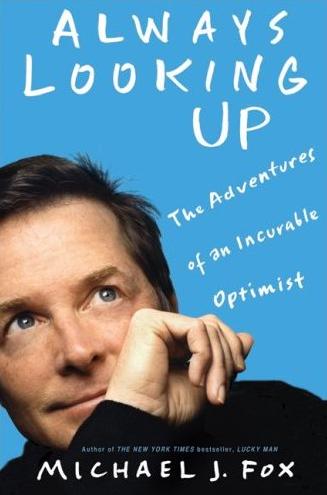
Into the Great Wide Open
Having decided halfway through the fourth season that my physical condition would not allow me to do a fifth, I began to
wonder if I'd even make it through the thirteen or so episodes that remained. My daily regimen of drugs (which, by the way,
have no psychotropic effect—no buzz whatsoever) affected my speech patterns and sometimes caused me to slur my words
or hesitate before saying my lines—a real bitch when you're trying
to time a joke. As for physical comedy, hell, I was just trying to avoid physical tragedy. Although everyone—cast, crew, and
audience—knew by this point that I had Parkinson's, I was still attempting to play a character who did not. Whatever comedic
or dramatic complexity a particular scene called for, my greatest acting challenge was always acting like I didn't have
Parkinson's. Though I continued to employ the same old bag of tricks that had served me for years—manipulating hand props
to control tremulous hands, leaning against walls, desks, and fellow actors, shifting in a chair or behind a table to cover my
uncontrollable leg and foot movements—the advance in symptoms was forcing me to update my repertoire. I discovered that,
for short periods of time, I could direct all the energy coursing through my body to one particular extremity— a hand, leg, or
foot. So when blocking a scene, I would position myself (and the rest of the cast as well) in such a way as to best conceal
the appendage in which the surge of Parkinsonian energy was manifest. Like I said, it's the same sort of thing I'd been doing
for years, and my thinking was that once I could explain to people why I was doing it, it would make the whole process that
much smoother. But it didn't make it any easier. It was still tough. Now people just had a better idea of why it was tough. My
friend Michael Boatman played Carter Heywood, the mayor's minority affairs liaison on the show. One day we were
rehearsing a scene that required both of us to pass through the mayor's office door simultaneously and in opposite directions.
Scripts in hand, we started to walk the scene, but when we both got to the door, instead of passing by Michael, I froze
directly in front of him. “You gotta move,” I said, rather more bluntly than intended. Michael is one of the nicest guys on the
planet, but he was a little confused and taken aback by my direction. “What?” he replied. “You gotta move. I can't move until
you move.” He eventually complied, and after the rehearsal, I tried to explain what had just happened. Occasionally, when my
brain asks my body to perform simple tasks that involve some degree of judgment regarding spatial relationships, the message
gets lost in transmission. It takes some form of outside stimulus, like the movement of an obstacle or, curiously, even the
introduction of an obstacle, for me to move forward. Some Parkies who freeze when walking can resume again when a ruler
is placed in front of their feet and they are forced to step over it. Michael, of course, accepted my explanation and even
managed to laugh with me about the strangeness of it
wonder if I'd even make it through the thirteen or so episodes that remained. My daily regimen of drugs (which, by the way,
have no psychotropic effect—no buzz whatsoever) affected my speech patterns and sometimes caused me to slur my words
or hesitate before saying my lines—a real bitch when you're trying
to time a joke. As for physical comedy, hell, I was just trying to avoid physical tragedy. Although everyone—cast, crew, and
audience—knew by this point that I had Parkinson's, I was still attempting to play a character who did not. Whatever comedic
or dramatic complexity a particular scene called for, my greatest acting challenge was always acting like I didn't have
Parkinson's. Though I continued to employ the same old bag of tricks that had served me for years—manipulating hand props
to control tremulous hands, leaning against walls, desks, and fellow actors, shifting in a chair or behind a table to cover my
uncontrollable leg and foot movements—the advance in symptoms was forcing me to update my repertoire. I discovered that,
for short periods of time, I could direct all the energy coursing through my body to one particular extremity— a hand, leg, or
foot. So when blocking a scene, I would position myself (and the rest of the cast as well) in such a way as to best conceal
the appendage in which the surge of Parkinsonian energy was manifest. Like I said, it's the same sort of thing I'd been doing
for years, and my thinking was that once I could explain to people why I was doing it, it would make the whole process that
much smoother. But it didn't make it any easier. It was still tough. Now people just had a better idea of why it was tough. My
friend Michael Boatman played Carter Heywood, the mayor's minority affairs liaison on the show. One day we were
rehearsing a scene that required both of us to pass through the mayor's office door simultaneously and in opposite directions.
Scripts in hand, we started to walk the scene, but when we both got to the door, instead of passing by Michael, I froze
directly in front of him. “You gotta move,” I said, rather more bluntly than intended. Michael is one of the nicest guys on the
planet, but he was a little confused and taken aback by my direction. “What?” he replied. “You gotta move. I can't move until
you move.” He eventually complied, and after the rehearsal, I tried to explain what had just happened. Occasionally, when my
brain asks my body to perform simple tasks that involve some degree of judgment regarding spatial relationships, the message
gets lost in transmission. It takes some form of outside stimulus, like the movement of an obstacle or, curiously, even the
introduction of an obstacle, for me to move forward. Some Parkies who freeze when walking can resume again when a ruler
is placed in front of their feet and they are forced to step over it. Michael, of course, accepted my explanation and even
managed to laugh with me about the strangeness of it
Read and Excerpt From the Book

