| The New York Optimist September 2008 |
Spa Search
by S. Dangerfield
A few nights ago I was attending an art opening at Lana Santorelli Gallery in Chelsea when
John Sebastian, the esteemed publisher of this magazine, introduced me to one of the
featured artists, an incredibly talented sculptress who lives part of the year in Northern
California. As we chatted, we discovered we shared an affection for a special spot in Santa
Cruz known as the Kiva Retreat House http://www.kivaretreat.com/.
The word "œspaâ", as most people know, comes from the town of Spa in Belgium, where
in the 16th century, it was discovered that drinking, and later bathing in, the local iron-rich
spring waters was salutary to physical health (and anything that could get people in
medieval Europe to bathe at all was probably a good thing.) The eponymous term evolved
to encompass any œcureâ that involved water. Nowadays, œspaa, especially in New York,
has come to mean a place where people (mostly women) can enjoy a number of self-
indulgent physical experiences geared to beauty and relaxation. By contrast, œretreatâ, as
Merriam Webster's first definition has it, is “an act or process of withdrawing especially
from what is difficult, dangerous, or disagreeableâ, or, what some would call life in New
York. We may all need a lot of both, but here in the City, I find the latter sadly lacking.
Kiva is a special place that combines elements of low-key understated spirituality with the
pure physical pleasures we normally associate on this coast with a œspaâ, mixed in a stew
of refreshing libertarianism and on-the-spot communitarianism. Kiva itself is an old
Victorian house with a huge fenced-in back yard that sits in an unassuming neighborhood a
few blocks from the beach.
For a mere $20 (and $2 more for the towel that is likely to be their only item of apparel for
the rest of their visit), anyone can drop in, get spa treatments ranging from a variety of
body and facial treatments including salt scrubs to mud and seaweed wraps and
rejuvenating facials. During the visit, most people soak in the hot tubs (there are several,
small and private or large and communal, scattered around the fenced-in “community
gardensâ, dip into the exhilarating “cold plungeâ, lie naked on the lawn, schvitz up in the
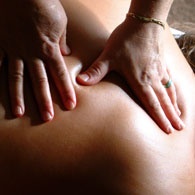
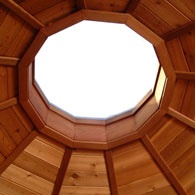
roomy cathedral-style sauna, choose from a variety of therapies in one of the several
massage rooms, or curl up with a book or a friend (old or just made) on one of the over-
stuffed sofas or chairs in front of a large roaring fire in the spacious fireplace room.
by S. Dangerfield
A few nights ago I was attending an art opening at Lana Santorelli Gallery in Chelsea when
John Sebastian, the esteemed publisher of this magazine, introduced me to one of the
featured artists, an incredibly talented sculptress who lives part of the year in Northern
California. As we chatted, we discovered we shared an affection for a special spot in Santa
Cruz known as the Kiva Retreat House http://www.kivaretreat.com/.
The word "œspaâ", as most people know, comes from the town of Spa in Belgium, where
in the 16th century, it was discovered that drinking, and later bathing in, the local iron-rich
spring waters was salutary to physical health (and anything that could get people in
medieval Europe to bathe at all was probably a good thing.) The eponymous term evolved
to encompass any œcureâ that involved water. Nowadays, œspaa, especially in New York,
has come to mean a place where people (mostly women) can enjoy a number of self-
indulgent physical experiences geared to beauty and relaxation. By contrast, œretreatâ, as
Merriam Webster's first definition has it, is “an act or process of withdrawing especially
from what is difficult, dangerous, or disagreeableâ, or, what some would call life in New
York. We may all need a lot of both, but here in the City, I find the latter sadly lacking.
Kiva is a special place that combines elements of low-key understated spirituality with the
pure physical pleasures we normally associate on this coast with a œspaâ, mixed in a stew
of refreshing libertarianism and on-the-spot communitarianism. Kiva itself is an old
Victorian house with a huge fenced-in back yard that sits in an unassuming neighborhood a
few blocks from the beach.
For a mere $20 (and $2 more for the towel that is likely to be their only item of apparel for
the rest of their visit), anyone can drop in, get spa treatments ranging from a variety of
body and facial treatments including salt scrubs to mud and seaweed wraps and
rejuvenating facials. During the visit, most people soak in the hot tubs (there are several,
small and private or large and communal, scattered around the fenced-in “community
gardensâ, dip into the exhilarating “cold plungeâ, lie naked on the lawn, schvitz up in the
roomy cathedral-style sauna, choose from a variety of therapies in one of the several
massage rooms, or curl up with a book or a friend (old or just made) on one of the over-
stuffed sofas or chairs in front of a large roaring fire in the spacious fireplace room.
This may sound a little too touchy-feely for our sophisto New York souls, but there are private tubs (with aroma therapy showers, even) and saunas,
as well. Or if you don't mind being naked with a bunch of strangers, just don't want to talk to them or, shudder, listen to them, “Kiva is divided
into social and meditative areas to accommodate individual preferences for being social or quietâ and peopl. respect the boundaries between these
spaces)
At any time from mid-morning to midnight, male and female, young and old (children 8 to 14 are charged $5 and under 8 are admitted for free), from
all walks of life, people come and go, mingling or meditating, chatting in the tubs, rooms or gardens, taking yoga classes or being transported to
private planes of physical and cerebral ecstasy on the massage tables. Now, there are lots of these places sprinkled around the remote mountain areas
of Northern California, but Kiva sits smack in the middle of a city (OK, so its only a little city, 50,000 souls, but you get the idea.)
So the artist and I got to lamenting the fact that, for all of the thousands of œspas in New York, there was no place comparable to Kiva in this town.
But is this true? Or if it is, does it have to be? Jealously overhearing this conversation, Mr. Sebastian asked me to find out.
as well. Or if you don't mind being naked with a bunch of strangers, just don't want to talk to them or, shudder, listen to them, “Kiva is divided
into social and meditative areas to accommodate individual preferences for being social or quietâ and peopl. respect the boundaries between these
spaces)
At any time from mid-morning to midnight, male and female, young and old (children 8 to 14 are charged $5 and under 8 are admitted for free), from
all walks of life, people come and go, mingling or meditating, chatting in the tubs, rooms or gardens, taking yoga classes or being transported to
private planes of physical and cerebral ecstasy on the massage tables. Now, there are lots of these places sprinkled around the remote mountain areas
of Northern California, but Kiva sits smack in the middle of a city (OK, so its only a little city, 50,000 souls, but you get the idea.)
So the artist and I got to lamenting the fact that, for all of the thousands of œspas in New York, there was no place comparable to Kiva in this town.
But is this true? Or if it is, does it have to be? Jealously overhearing this conversation, Mr. Sebastian asked me to find out.
In the next few weeks, I will be undertaking the search for a co-ed spa-cum-retreat in
the concrete jungle and reporting back with the results. Now, in most of the US, and in
New York in particular, the œspa experienceâ is geared towards the female, or at least
to the aggressively metrosexual. Insofar as I am neither (despite any snide remarks you
may have heard) the first thing I need to assist me in my quest is a female “spa
buddyâ€. Not that I won't turn down the company of another guy in the steam rooms,
but I doubt that any of them I know are going to be able to comment meaningfully on
the quality of exfoliation or pedicure treatments. I have begun my search and have a few
promising candidates, but this may be dirty, grueling and even dangerous (just talk to
my friend who was crippled for about three months from a œbackwalkingâ treatment
from an overly lumpy masseuse that gave âœdeep tissueâa whole new meaning to her)
work, and I'm not sure one candidate can make it through the whole tour.
As soon as I get the team set up, I'll be starting the hunt. If any readers have
suggestions, please e-mail me at sdangerfield@thenewyorkoptimist.com. Remember,
we're not looking for some Sex and the City lipstick and make-up emporium - we're not
out to buy products. Nor are we out to find the newest Korean rub & tug joint. We are
looking for a special place that comes closest to replicating the Kiva experience here in
the City. Look for future dispatches from the front.
the concrete jungle and reporting back with the results. Now, in most of the US, and in
New York in particular, the œspa experienceâ is geared towards the female, or at least
to the aggressively metrosexual. Insofar as I am neither (despite any snide remarks you
may have heard) the first thing I need to assist me in my quest is a female “spa
buddyâ€. Not that I won't turn down the company of another guy in the steam rooms,
but I doubt that any of them I know are going to be able to comment meaningfully on
the quality of exfoliation or pedicure treatments. I have begun my search and have a few
promising candidates, but this may be dirty, grueling and even dangerous (just talk to
my friend who was crippled for about three months from a œbackwalkingâ treatment
from an overly lumpy masseuse that gave âœdeep tissueâa whole new meaning to her)
work, and I'm not sure one candidate can make it through the whole tour.
As soon as I get the team set up, I'll be starting the hunt. If any readers have
suggestions, please e-mail me at sdangerfield@thenewyorkoptimist.com. Remember,
we're not looking for some Sex and the City lipstick and make-up emporium - we're not
out to buy products. Nor are we out to find the newest Korean rub & tug joint. We are
looking for a special place that comes closest to replicating the Kiva experience here in
the City. Look for future dispatches from the front.

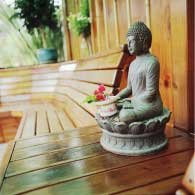
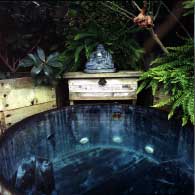
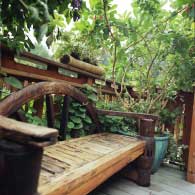

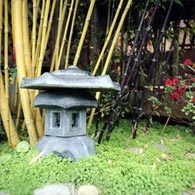
| Kiva Gardens Kiva is divided into social and meditative areas to accommodate individual preferences for being social or quiet. |
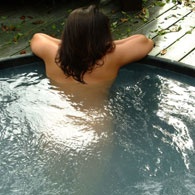
| Hot tubs |
| Philosophy Kiva was created as a gathering place for people to come and reclaim their natural self. It was modeled after the Japanese Bath House and our vision of a place where people would come to cleanse and rejuvenate their minds and bodies as well as nurture themselves through social interaction in a |
 |  |  |  |  |  |  |  |  |  |  |  |